
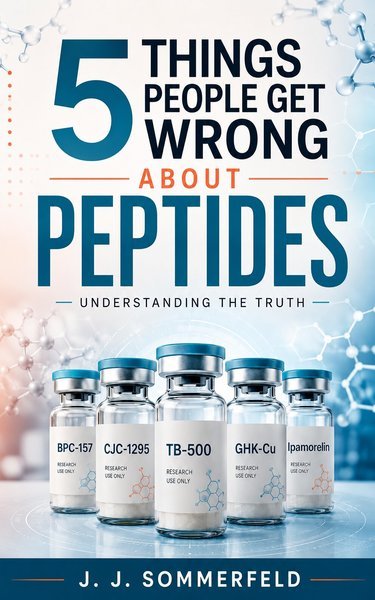
Peptides are receiving more attention than ever, but increased interest has also brought confusing claims, oversimplified explanations, and questionable promises.
In 5 Things People Get Wrong About Peptides: Understanding the Truth, J. J. Sommerfeld offers a practical introduction to five common peptide misconceptions. Available as a free download, the guide is designed to help curious readers look beyond the marketing and develop a clearer understanding of what may actually be happening inside the body.
Separating Peptide Facts From Popular Misconceptions
Are peptides supplements? Does “natural” automatically mean safe? Can eating more protein increase peptide activity? Can nutrition create the same effects as synthetic peptide compounds?
These questions often produce conflicting answers online. Instead of presenting peptides as a shortcut or miracle solution, Sommerfeld examines the biological context behind the claims.
The guide explores why factors such as cellular signaling, nutrition, timing, recovery, and individual physiology all matter. By considering these elements together, readers can begin evaluating peptide-related information with a more informed and critical perspective.
Understanding More Than the Marketing
Peptide discussions are frequently reduced to simple promises about recovery, wellness, appearance, or physical performance. Human biology, however, is rarely that straightforward.
5 Things People Get Wrong About Peptides encourages readers to distinguish between how peptides are promoted and how biological processes actually work. Its five-misconception structure makes a complex topic more approachable without relying on sensational language or unrealistic guarantees.
The goal is not to promise a particular result. It is to provide readers with a stronger foundation for recognizing incomplete explanations, asking better questions, and separating scientific concepts from persuasive marketing.
Why Nutrition, Timing, and Physiology Matter
One of the guide’s central ideas is that peptide activity cannot be understood in isolation. The body’s signaling systems interact with nutrition, sleep, recovery, timing, and numerous individual factors.
This broader perspective is especially important when readers encounter claims suggesting that a single food, supplement, or compound will produce the same outcome for everyone. Sommerfeld’s guide invites readers to consider the surrounding biological conditions rather than focusing only on the peptide itself.
That approach makes the book a useful starting point for people who want context before exploring the subject further.
Who Should Read This Free Peptide Guide?
5 Things People Get Wrong About Peptides may appeal to:
- Readers who are researching peptides for the first time
- Health and wellness enthusiasts encountering conflicting claims
- People interested in nutrition, recovery, and cellular signaling
- Readers who want a straightforward introduction without miracle promises
- Anyone seeking a clearer way to evaluate peptide-related information online
The guide does not require an advanced scientific background. It introduces the subject through familiar questions and explains why the answers are often more nuanced than advertising or social media posts suggest.
Download 5 Things People Get Wrong About Peptides for Free
When health trends become popular, misinformation can travel as quickly as legitimate research. A clear foundation can make it easier to recognize exaggerated claims and approach unfamiliar concepts thoughtfully.
With its focus on five widespread misconceptions, 5 Things People Get Wrong About Peptides: Understanding the Truth by J. J. Sommerfeld offers readers an accessible place to begin.
Download your free copy through BookFunnel
This book feature is provided for informational purposes only and is not medical advice. Consult a qualified healthcare professional before using peptide compounds, supplements, or making changes to your healthcare.